

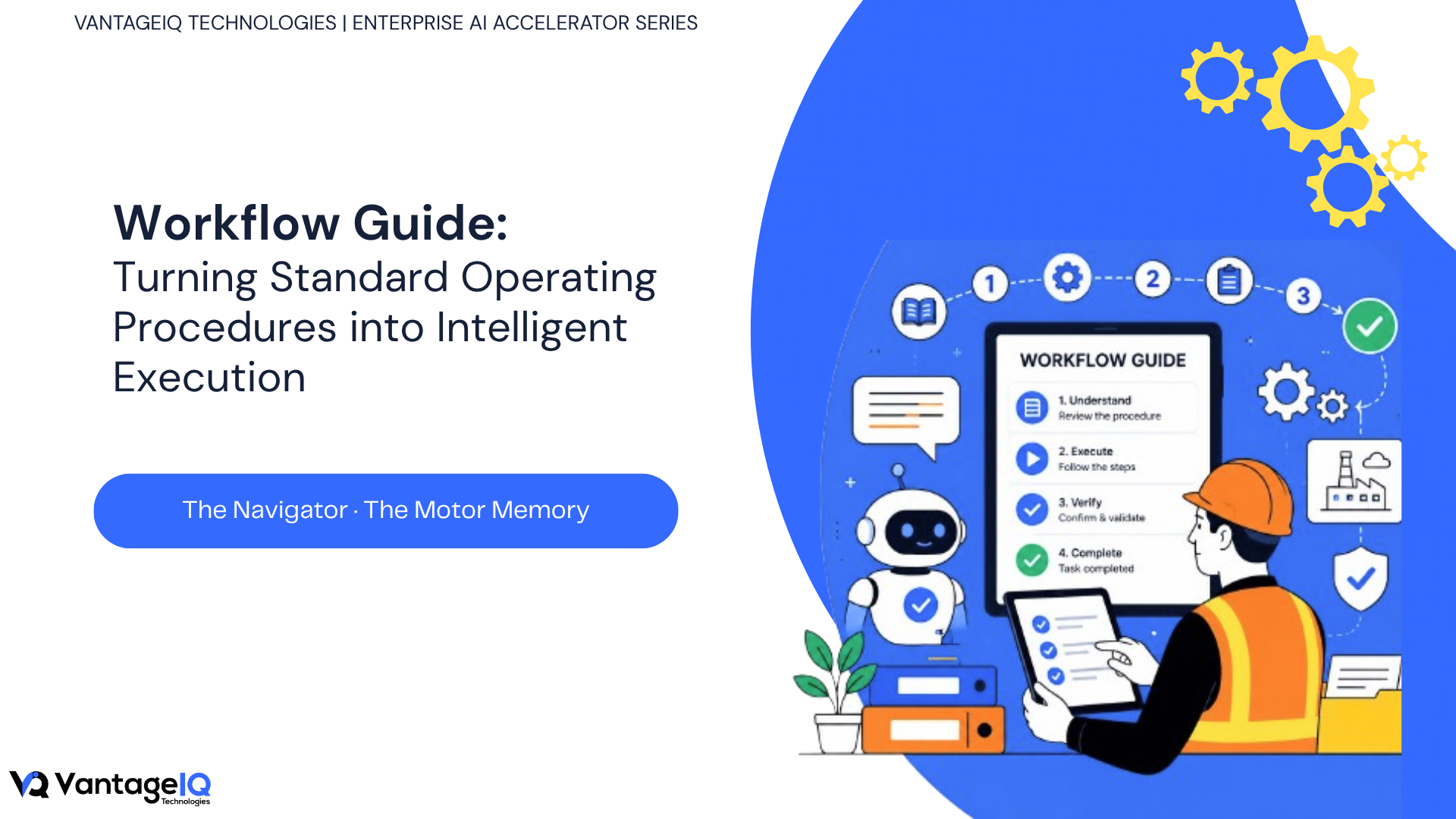
Workflow Guide: A reusable enterprise AI accelerator that helps organizations transform static procedures into guided, step-by-step execution experiences, improving consistency, quality, and operational compliance.
Helping every employee perform every critical procedure with confidence.
Every organization depends on procedures to deliver consistent outcomes. Whether it’s maintaining industrial equipment, onboarding employees, conducting inspections, or following clinical protocols, standard operating procedures (SOPs) are designed to reduce variability and ensure work is performed correctly.
Yet, documented procedures alone don’t guarantee consistent execution.
Employees often work in dynamic environments where they must interpret lengthy manuals, switch between systems, or rely on tribal knowledge to complete critical tasks. As operational complexity grows and experienced workers retire, maintaining procedural consistency becomes increasingly difficult.
The challenge is no longer creating procedures. It’s making sure they’re followed accurately, every time, by every employee.
Why Procedures Often Break Down in Practice
Most organizations invest heavily in documenting their operational knowledge. Over time, they build extensive libraries of SOPs, work instructions, maintenance manuals, safety protocols, and operational playbooks.
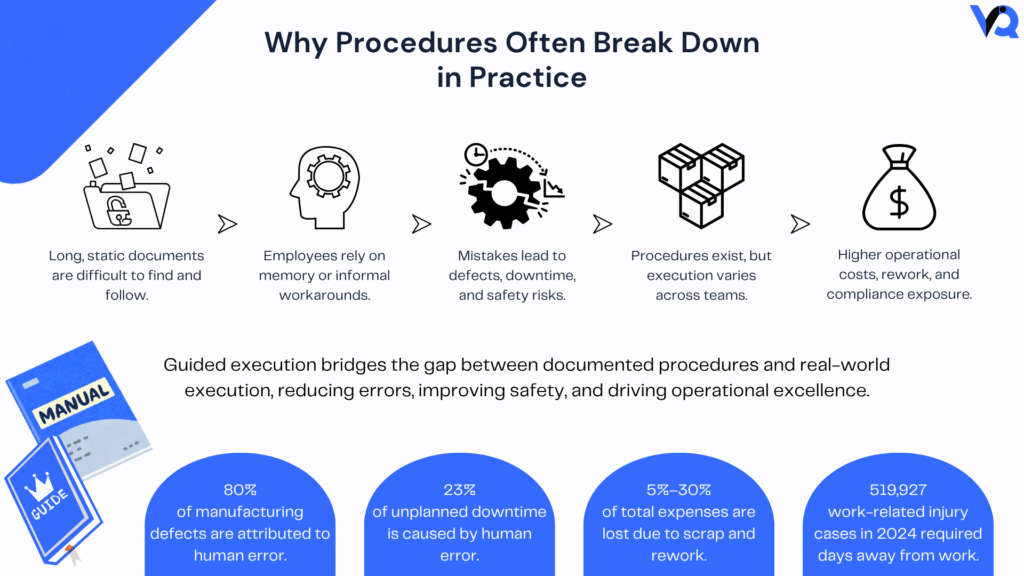
However, these documents are often difficult to access and even harder to apply in the moment.
Frontline employees frequently work under time pressure, making it impractical to search through lengthy manuals while performing a task. Procedures may also evolve faster than training programs, leaving teams dependent on experience rather than standardized guidance.
The consequences are significant.
According to the U.S. National Institute of Standards and Technology (NIST), human error contributes to approximately 80% of manufacturing defects, while procedural mistakes remain a leading cause of quality issues and operational disruptions. OSHA also continues to report hundreds of thousands of workplace injuries each year that require days away from work, highlighting the importance of consistent procedural execution.
Organizations are increasingly recognizing that operational excellence depends not only on documenting knowledge, but on delivering the right guidance at the moment work is performed.
From Static Documents to Guided Execution
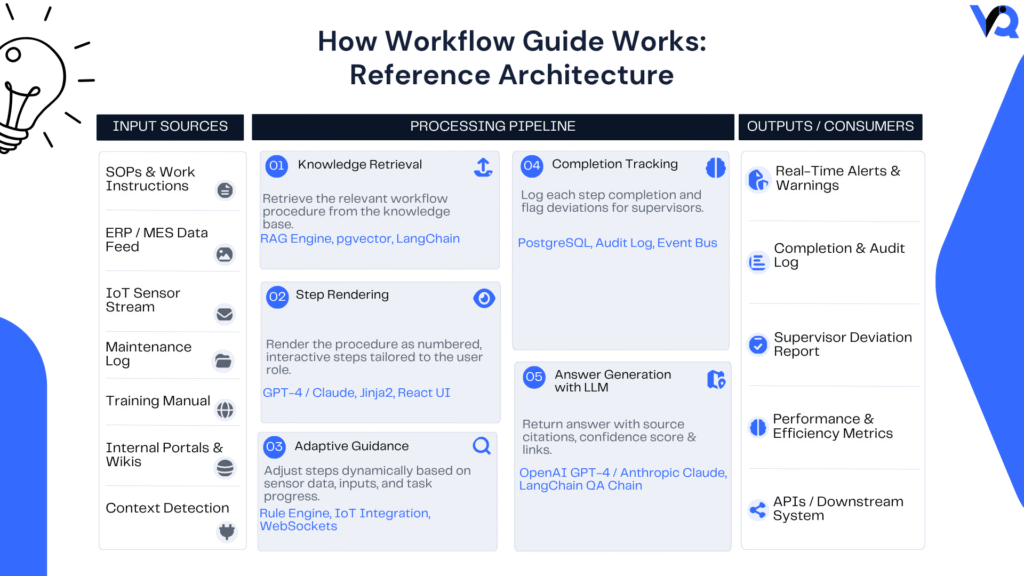
Workflow Guide is a reusable enterprise AI accelerator that enables organizations to build intelligent, guided workflow experiences from existing procedures, manuals, and operational documentation.
Rather than rebuilding processes from scratch, the accelerator provides reusable implementation patterns, orchestration workflows, governance controls, and execution frameworks that can be adapted across departments and industries.
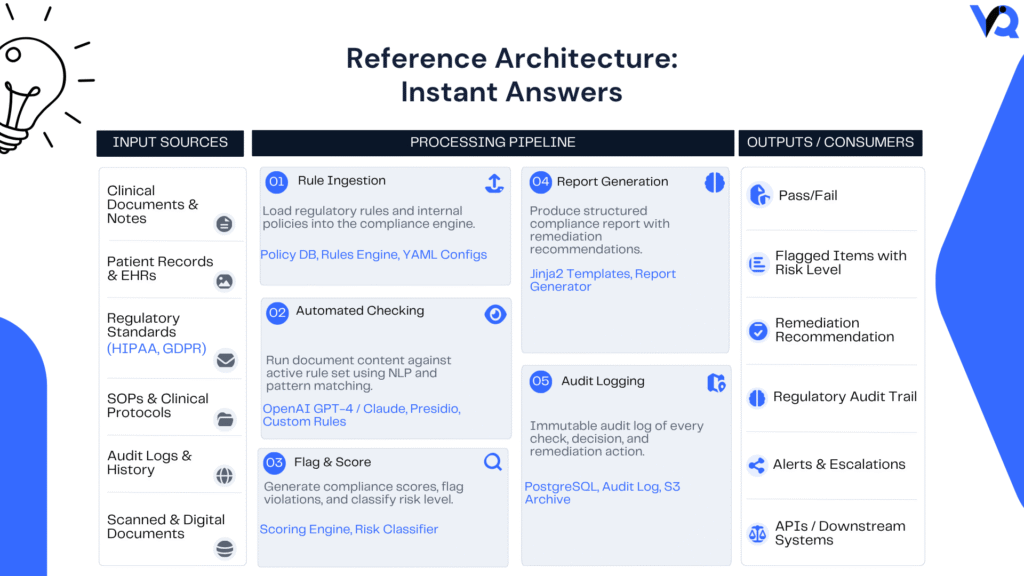
Operating within VantageIQ’s Knowledge Engine layer, Workflow Guide transforms static documentation into interactive, context-aware guidance that supports employees throughout each stage of a task while maintaining visibility, consistency, and accountability.
What the Accelerator Enables
Workflow Guide provides a reusable foundation for delivering guided execution across operational environments.
Key Capabilities
- Document-to-Workflow Conversion — Transform existing SOPs into interactive workflows.
- Context-Aware Guidance — Deliver instructions based on role, task, location, or equipment.
- Conditional Decision Paths — Adapt workflows dynamically based on user inputs and operational conditions.
- Step Verification — Confirm task completion through user inputs, images, or connected systems.
- Exception Management — Escalate deviations and unexpected conditions to the appropriate teams.
- Audit Logging — Maintain complete records of every completed workflow.
- Multi-Modal Interaction — Support text, voice, and visual guidance across devices.
- Workflow Integration — Connect guided procedures with enterprise applications and operational systems.
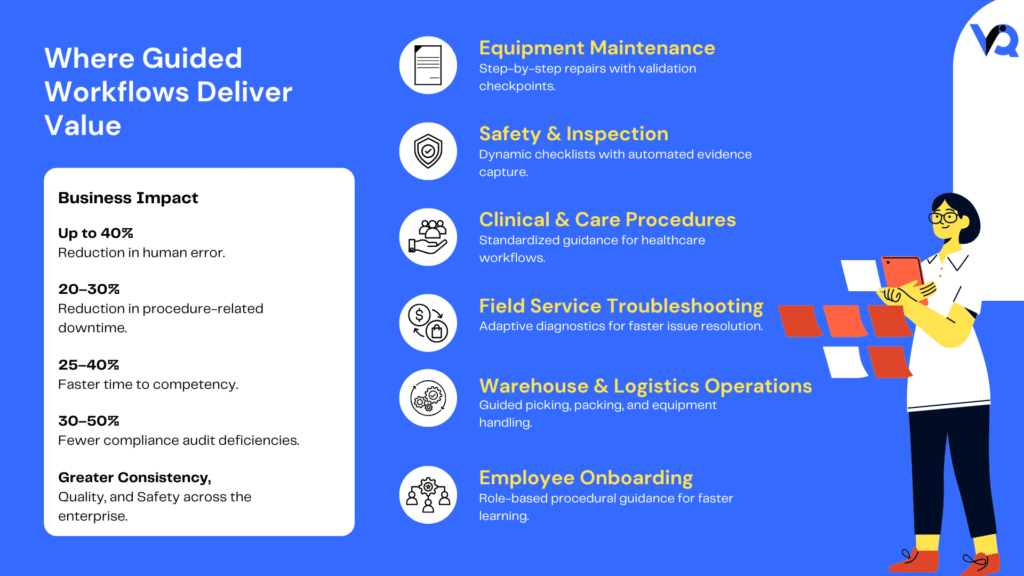
Where Guided Workflows Deliver the Greatest Value
Because Workflow Guide focuses on execution rather than documentation, it supports a wide range of operational scenarios.
Equipment Maintenance
Technicians receive step-by-step maintenance instructions with built-in validation checkpoints, reducing errors and improving first-time fix rates.
Safety Inspections
Inspectors follow dynamic checklists that adapt to site conditions while automatically documenting completed activities and identified risks.
Clinical Procedures
Healthcare professionals receive guided support for care protocols, sanitation procedures, and operational workflows, helping improve consistency and patient safety.
Field Service Operations
Service engineers follow structured diagnostic workflows that adjust based on equipment responses, accelerating troubleshooting and reducing downtime.
Warehouse & Logistics Operations
Teams execute receiving, picking, packing, and shipping procedures through guided workflows that improve accuracy and reduce operational variation.
Employee Onboarding
New employees receive structured, role-specific procedural guidance that accelerates learning while reinforcing organizational best practices.
The Measurable Outcomes
Organizations implementing guided workflow capabilities often focus on improving consistency, reducing operational errors, and accelerating workforce readiness.
Typical outcomes include:
Metric | Typical Improvement |
Human error rate | Up to 40% reduction |
Procedure-related downtime | Reduced through guided execution |
Time to competency | Faster onboarding and training |
Compliance audit findings | Lower through automated workflow logging |
Operational consistency | Improved across teams and locations |
Beyond these operational gains, guided execution helps organizations preserve institutional knowledge, standardize best practices, and reduce dependence on individual expertise.
Industries Where Execution Matters Most
Workflow Guide is particularly valuable for organizations where consistent execution directly impacts quality, safety, compliance, or customer outcomes.
- Manufacturing — Assembly operations, maintenance, quality inspections, and production workflows.
- Healthcare — Clinical procedures, patient care protocols, and operational compliance.
- Energy & Utilities — Asset maintenance, field inspections, and safety operations.
- Logistics & Warehousing — Warehouse processes, equipment operations, and inventory workflows.
- Aerospace & Defense — High-reliability manufacturing, maintenance, repair, and overhaul (MRO) procedures.
- Field Services — Equipment installation, diagnostics, inspections, and customer support operations.
Building Operational Consistency at Scale
As organizations continue to digitize operations, execution is becoming just as important as information.
Employees no longer need static documents that explain what should happen. They need intelligent guidance that supports what they are doing in real time.
Workflow Guide provides the reusable foundation for building those capabilities faster. By transforming procedural knowledge into guided execution experiences, organizations can improve operational consistency, reduce errors, accelerate training, and create more resilient business operations.
The organizations that consistently outperform their peers are often those that make expertise available at the point of work. Guided execution helps turn documented knowledge into repeatable operational excellence.