

The enterprise technology sector is navigating a hyper-intensive capital realignment cycle. By the first half of 2026, cumulative global AI infrastructure capital expenditure (capex) reached an estimated $725 billion. Driven by a race to secure enterprise AI dominance, hyperscalers and technology leaders poured operational cash directly into advanced silicon (GPUs), data center development, and specialized power grid tie-ins.
To fund these massive outlays and preserve operating margins in a high-interest-rate environment, executive suites made a fateful calculation: The Premature Disruption Hypothesis.
Executive management teams assumed that generative AI and agentic coding platforms would immediately automate mid-tier software engineering, quality assurance (QA), and operational workflows. Under this premise, U.S. technology firms executed aggressive “efficiency and rightsizing programs,” cutting over 416,000 roles between 2024 and mid-2026, with AI explicitly cited as the primary driver for over 100,000 of those reductions in 2026 alone.
However, as the “AI bill” came due, the assumption of full-scale human displacement encountered severe operational hurdles.
Here is an analysis of the structural failures of premature automation, the rising costs of AI adoption, and the resulting pivot toward India’s Global Capability Centers (GCCs).
The Premature Disruption Hypothesis vs. Operational Reality
The strategic push for immediate human displacement relied on the belief that generative AI tools would deliver instant productivity gains across the board. In reality, replacing technical teams with automated agents triggered an “AI substitution deficit.”
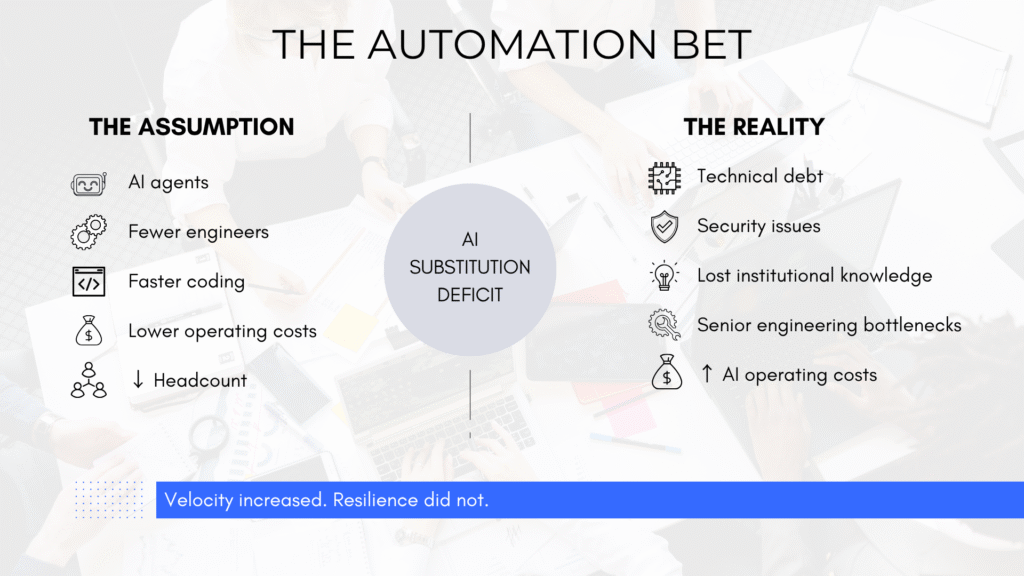
While AI coding assistants proved adept at generating “boilerplate” code, they struggled when confronted with enterprise-scale complexity:
- Architectural Bottlenecks: AI assistants failed at multi-repository dependency management, zero-day security vulnerabilities, and legacy system refactoring.
- Loss of Tacit Knowledge: Blanket layoffs eliminated senior and mid-level staff who held undocumented, domain-specific institutional knowledge. Without human context, AI models lacked the domain inputs required to operate autonomously, leading to elevated system outages and mounting maintenance backlogs.
- The Ford Precedent: In a notable strategic reversal, Ford brought back over 300 veteran quality engineers after discovering that AI-powered quality systems could not replace decades of specialized engineering experience.
Key Takeaway: AI is a productivity amplifier, not a standalone replacement for human technical judgment. Cutting mid-tier engineers to fund GPU acquisition created architectural fragility that AI alone could not fix.
The Cost Paradox: "Token Maxing" and Escalating AI Budgets
A core premise of the automation-led efficiency mandate was that AI agents would be cheaper to run than human teams. In practice, operational AI costs escalated rapidly.
Between late 2025 and mid-2026, average token costs more than doubled, rising from $1.11 to $2.12 per million tokens. This cost inflation was further exacerbated by a corporate trend known as “token maxing.”
THE DYNAMICS OF “TOKEN MAXING”
- Performance Theater: Engineers over-consume tokens on minor tasks to appear productive and “juice” adoption leaderboards.
- Executive Pressure: Leadership demands high token usage as a KPI, treating consumption as a proxy for digital maturity.
- Budget Exhaustion: Enterprises blow through annual AI budgets in weeks, forcing companies like Microsoft to restrict employee licenses.
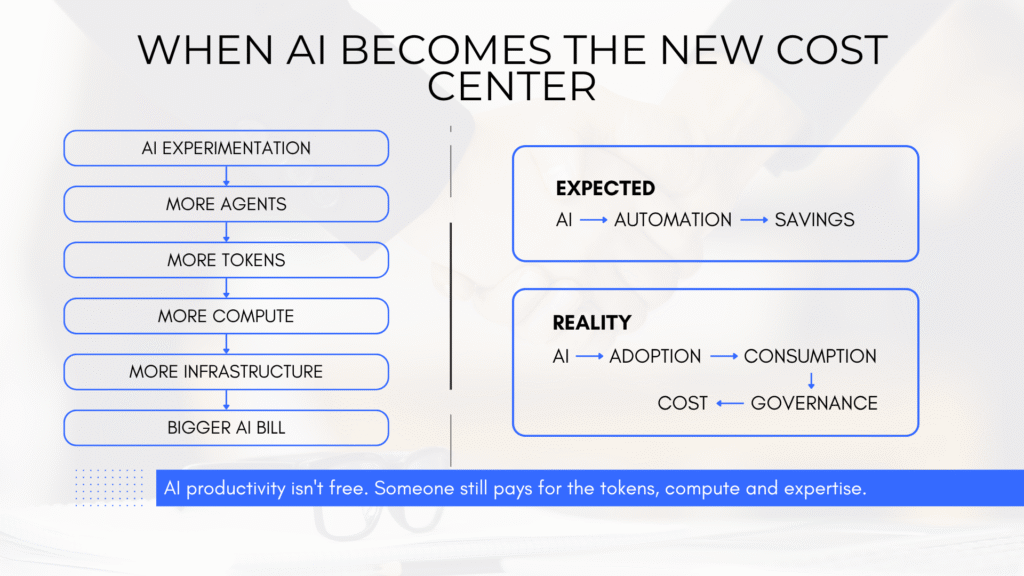
By mid-2026, the operational expense of running AI agents became comparable to and in sectors like call centers and complex data entry, more expensive than human labor. Major technology firms faced a stark choice: continue funding unsustainable token consumption or re-anchor the human expertise required to govern these models efficiently.
The Re-Anchoring Pivot: Why Enterprise Engineering Moved to India
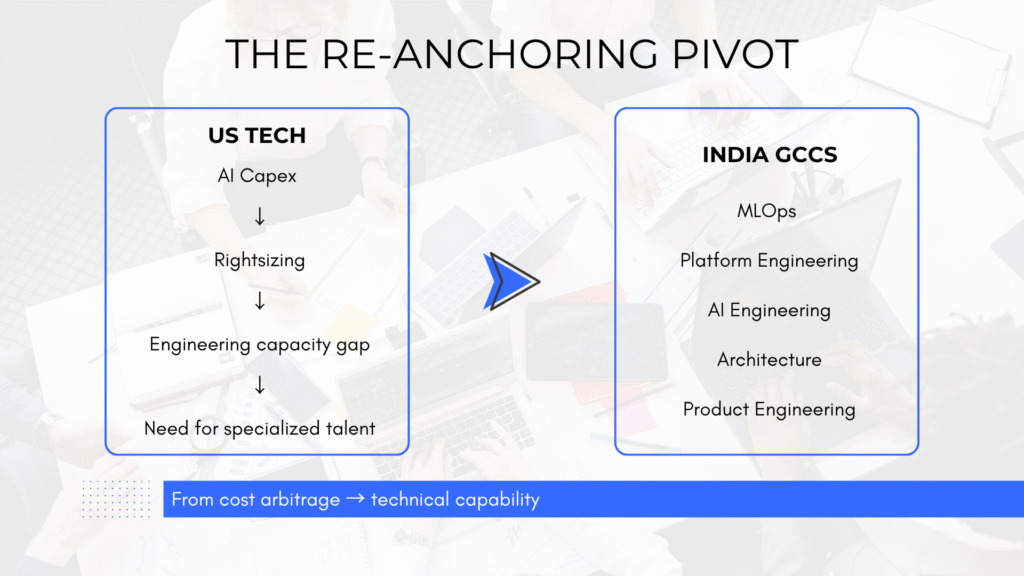
Faced with heavy GPU debt loads, depreciation expenses, and high domestic salary benchmarks in North America, corporations could not afford to rebuild engineering capacity through traditional U.S. hiring.
Instead, multinational firms redirected core engineering and transformation mandates to their captive Global Capability Centers (GCCs) in India.
Unlike third-party IT service vendors, which faced revenue compression as AI reduced billable hours for routine tasks, captive Indian GCCs decoupled from the broader tech slowdown. In FY2026 alone, Indian GCCs added nearly 200,000 net employees.
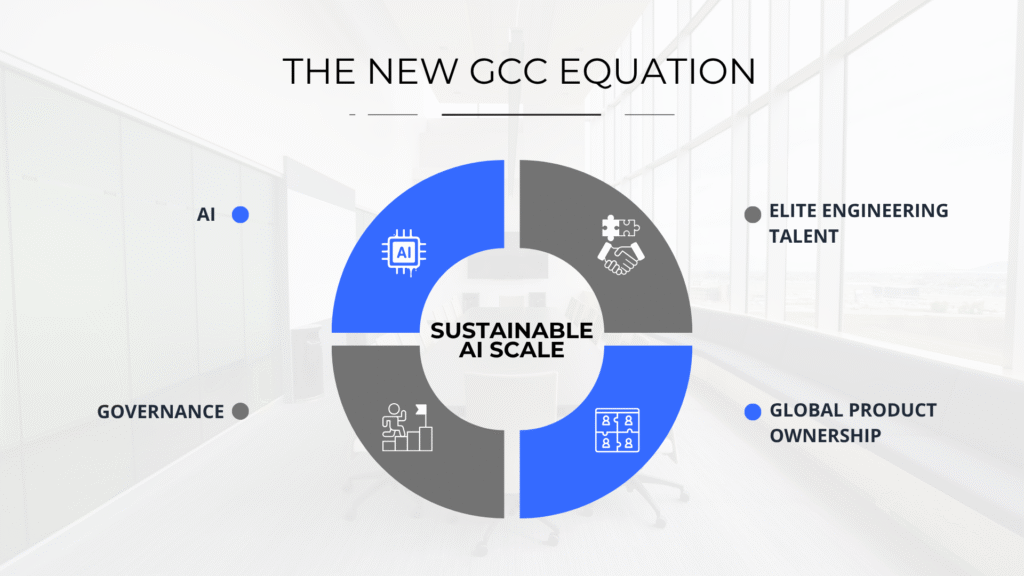
These centers evolved from back-office support outposts into sovereign transformation hubs. By owning core intellectual property and managing global product roadmaps, Indian GCCs provided the deep technical talent such as MLOps specialists and platform architects, needed to govern AI outputs within a sustainable operational cost structure.
The attempt to replace human engineering teams with autonomous AI to fund a $725 billion infrastructure cycle exposed severe operational and financial gaps. Rather than eliminating the need for human talent, the resulting “AI substitution deficit” highlighted the necessity of specialized technical governance, setting the stage for a fundamental restructuring of global tech leadership.
Navigate the AI Talent Transition with VantageIQ Technologies
Re-anchoring elite engineering, managing AI governance frameworks, and scaling strategic GCC hubs requires deep ecosystem expertise. At VantageIQ Technologies, we assist global enterprises in designing high-impact talent architectures and establishing sovereign transformation centers in India.
Connect with the VantageIQ Technologies team today to optimize your global technical footprint.
Next in the Series: Read Blog 8: The Human + AI Era & 2030 Outlook to explore how the orchestration model, leadership decentralization, and multi-city expansion are defining the future of global technology hubs.
